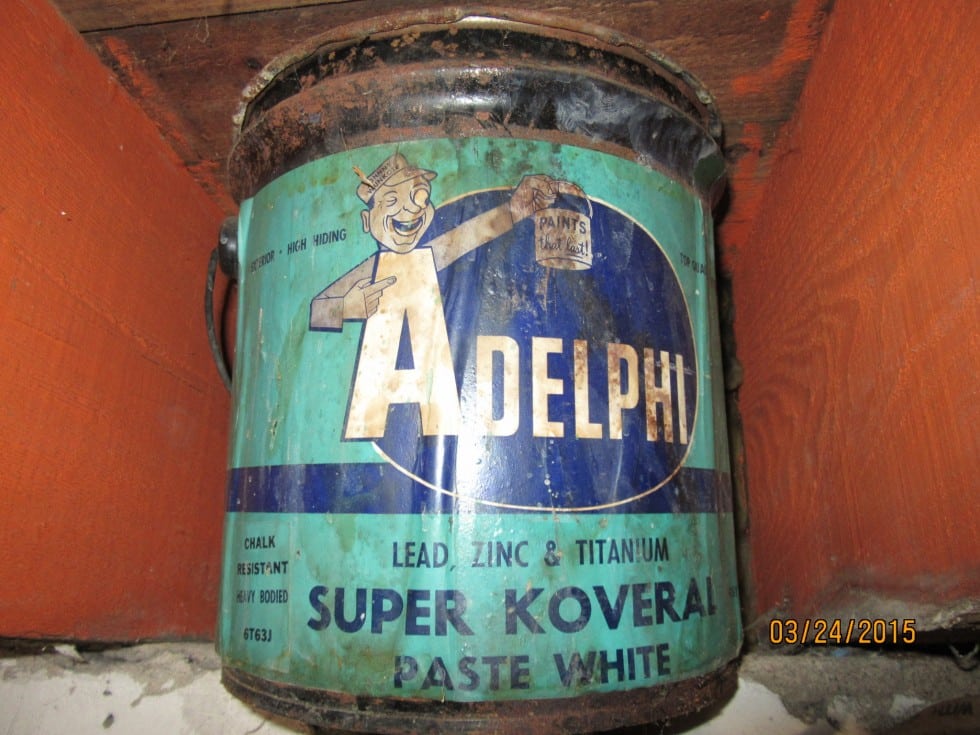
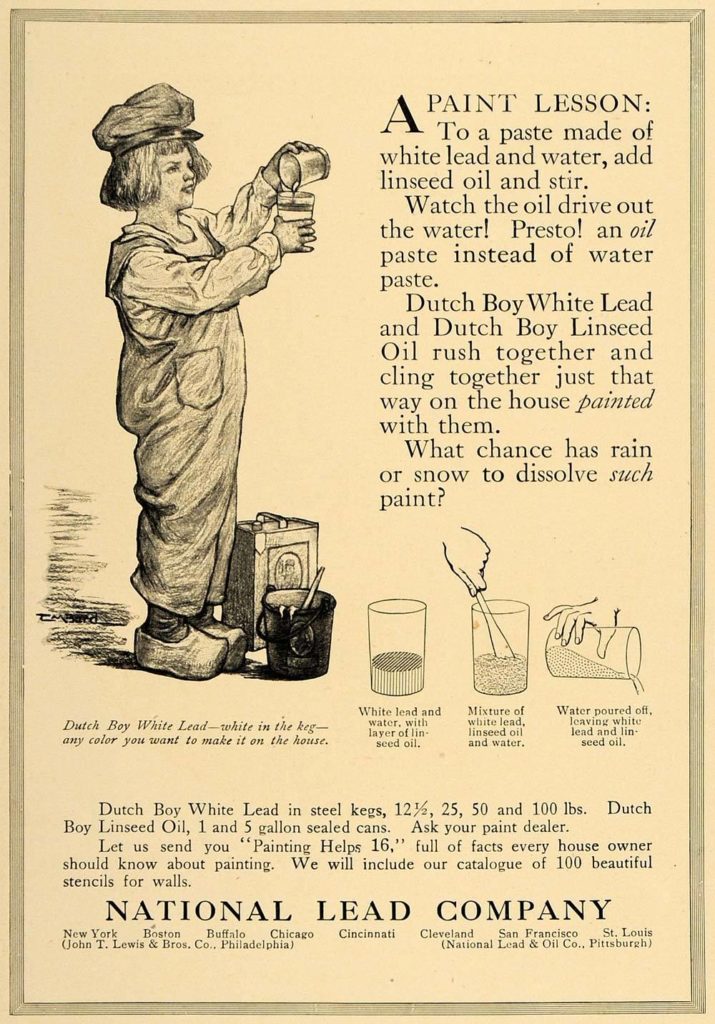
Old-time painters ground their lead pigments by hand. They placed dry, toxic lead white powder onto a slab and combined it with a binder, e.g., linseed oil or walnut oil, crushing and mulling the mixture together with a heavy, flat-bottomed glass or stone pestle until it reached a smooth, buttery paste.
Is there any wonder they died young?
It was not banned for residential use in the U.S. until 1978.
They used the lead compounds to give the paint its color; make the paint cover well, and to protect the paint and the underlying surface from degradation caused by exposure to sunlight.
The lead compounds are added to oil-based paints as driers, a.k.a. catalysts, and are sometimes added metal paint to inhibit rust and corrosion. Driers are the problem in modern oil-based artists paint as well.
Lead carbonate can also neutralise the acidic decomposition products of some of the oils that make up the paint, so the coating stays tough, yet flexible and crack-resistant, for longer.
In the old days, they did not know and they had no choice.
Today, it’s just mostly greed.
Related: Why they still use lead in paint.
Using a lead test kit: worth the money
Why did they use lead paint in the old days?
Also: Beethoven’s deafness and lead poisoning
Comment below: